By Ruy Arroyo · Reviewed by Dr. Alfonso Martínez, psychiatrist specializing in dual diagnosis and addiction · Updated October 25, 2026 · 15 min read
The symptoms of cannabis addiction come down mainly to five: you smoke more, or for longer, than you meant to and can't cut back; weed takes up more and more of your time and headspace; you let go of things that used to matter to you; you keep smoking even though you notice it's taking a toll on your mood, memory or relationships; and when you stop, irritability, insomnia and anxiety show up. With two or three of these signs in the last twelve months, we're already talking about mild cannabis use disorder; with six or more, severe.
Before we go on, a deal. Lots of people use cannabis without developing any problem, and this article isn't going to argue with that. Nor is it going to talk to you about legality or lungs. It's written for anyone who's had a nagging feeling for a while—or who's watching someone who does—and wants a yardstick to measure themselves against without being lectured. Cannabis, marijuana, weed, hash or joints: here we're talking about the same thing. I'm the author, Ruy Arroyo, after more than fifteen years working with people who use, and it has been reviewed by Dr. Alfonso Martínez, psychiatrist and medical director of Charlas Adictivas (medical review: October 2026). Any figures you read come with their source linked and numbered at the end; what you read about how it feels to live with it comes from our practice.
"Weed isn't addictive": what the evidence says
It's the line we hear most in the first conversation, almost always from someone who has been smoking daily for years. And there's some truth to it. The problem is the part that isn't true.
How many people who smoke end up hooked
According to the NIDA research report, between 22% and 30% of people who use cannabis have a cannabis use disorder. A review of 21 studies published in Addictive Behaviors in 2020 narrows it down: 22% of people who use develop a disorder, 13% develop dependence, and among young people who use weekly or daily, the risk of dependence rises to one in three.
Without the percentages: if eight of you smoke in your group of friends, odds are it'll get complicated for two. And there's no test beforehand that tells you which two. The Cannabis Monograph 2025 from the Spanish Observatory on Drugs sums it up in one line: the main risk factor for developing a disorder is how often you use. Other factors count—genetic vulnerability exists and is well documented, and age of first use and the potency of what you smoke also matter—but frequency outweighs them all: how many days a week you smoke is the strongest predictor of a problem. It's also the only one of those factors that's up to you.
Why it seems like it isn't addictive
Because cannabis withdrawal doesn't knock anyone flat. There are no seizures like with alcohol, none of the dramatic physical symptoms of opioids. Rafael Mora, psychiatrist and head of the Mental Health Department at the Consorcio Hospitalario Provincial de Castellón, compared its intensity to tobacco withdrawal in a Maldita Ciencia piece on quitting marijuana, and in our practice we find the comparison fair. But notice what it implies: nobody says tobacco isn't addictive.
What cannabis withdrawal does isn't knock you out; it wears you down. Three nights of bad sleep, a week of snapping at the people who least deserve it, the feeling that nothing appeals. And the quickest fix, the one your brain suggests at eleven at night, is to roll another one. A meta-analysis in JAMA Network Open with 23,518 people found withdrawal syndrome in 47% of people with regular or dependent use, and in 54% of those in outpatient treatment. Almost half. Being mild doesn't mean it doesn't exist; it means it's easy to cover up.
The hash of 2026 isn't the hash of 2006
This is the argument that most unsettles the forty-year-old who says "I smoked when I was young and I turned out fine." The same Observatory Monograph reports that resin seized in Spain between 2002 and 2014 had a THC concentration of around 10–15%, with a low of 9.8% in 2006. In 2023 the average was 29%. What you can buy in any park today is, gram for gram, two to three times as potent as what that generation smoked. The trend is the same across the European Union: the European Drug Report 2026 puts average resin THC at 24.6%, 66% higher than in 2014.
And it shows in hospitals. In 2022, cannabis was present in 46.2% of substance-related emergency room episodes reported in Spain, compared with 6.2% in 1996. Hospitalizations with a diagnosis of cannabis use disorder went from 1,300 in 2016 to 2,152 in 2023. This isn't alarmism; these are the Ministry's numbers.
The 11 symptoms of cannabis addiction, in plain language
The diagnostic manual we use, the DSM-5, defines cannabis use disorder with eleven criteria. The ICD-11, the World Health Organization's classification, speaks of "cannabis dependence" with the same underlying logic: loss of control, use taking increasing priority, and physiological features such as tolerance. The criteria are written for clinicians, so I'll translate them into how they sound in a first session. Think about the last twelve months.
You lose control (criteria 1, 2 and 4)
- You smoke more, or for longer, than you planned. "Just one after dinner" that turns into three and the early hours of the morning.
- You've tried to cut back or quit and it hasn't worked. The classic "I'll quit in September" that's now four Septembers running.
- You have cravings: an intense urge that shows up at set times or in specific places and that's hard to ignore.
Weed organizes your day (criterion 3)
- You spend a lot of time getting it, using it or recovering from it. Working out how much is left, who has some, going out to get it even in the rain, the sluggish morning after. When you add up the hours, they're usually surprising.
It seeps into what matters (criteria 5, 6 and 7)
- You fall short on obligations at work, at school or at home because of using or its consequences.
- You keep smoking even though it causes problems with people: the partner who can't stand it anymore, the mother who asks, the friend who said something once and never brought it up again.
- You've given up or cut back on things you used to enjoy —sports, music, hanging out with people who don't smoke— because they clashed with smoking.
You keep going even though it takes a toll (criteria 8 and 9)
- You use in physically risky situations, like driving.
- You keep going even though you know it's affecting you —your mood, anxiety, memory or sleep. This is the criterion most people recognize and fewest admit out loud.
Tolerance and withdrawal (criteria 10 and 11)
- Tolerance: you need more to get the same effect, or the same amount barely does anything anymore.
- Withdrawal: after a few days without it, irritability, anxiety, insomnia, loss of appetite or very strange dreams appear, and smoking again makes them go away. There's a whole section on this further down.
How many symptoms it takes
| Criteria met in 12 months | Severity according to DSM-5 | How it usually looks in practice |
|---|---|---|
| 0-1 | No disorder diagnosed | Use with no apparent problem. Worth keeping an eye on frequency. |
| 2-3 | Mild | "I've got it under control, but…". A good time to step in. |
| 4-5 | Moderate | Use already organizes part of the day and of relationships. |
| 6 or more | Severe | What people commonly call addiction; almost always with withdrawal when stopping. |
An honest note: most people who come to cannabis addiction treatment in Madrid don't come because they've counted criteria; they come because someone has had enough or because they've made three failed attempts to quit. The criteria are there so you can do it before it gets to that point.
Quick test: how do I know if I'm addicted to marijuana or just smoke a lot? (CAST, 6 questions)
If you want something quicker than the eleven criteria, the CAST (Cannabis Abuse Screening Test) is the questionnaire Spain's Ministry of Health uses in its population surveys. It's six questions about the last twelve months. Score each one from 0 to 4: never (0), rarely (1), from time to time (2), fairly often (3), very often (4).
- Have you smoked cannabis before midday?
- Have you smoked cannabis when you were alone?
- Have you had memory problems when smoking cannabis?
- Have friends or family told you that you should cut down?
- Have you tried to cut down or stop using without succeeding?
- Have you had problems because of your use (an argument, a fight, an accident, poor results at work or school)?
What 4 or more points means
Four points or more is considered problematic use. It isn't a diagnosis, it's an amber light: it means an assessment with a professional is worthwhile. In our practice the CAST is the first thing we use, and then we compare it against the DSM-5 criteria and a longer interview that also looks at mood, sleep and anxiety. If you score four and smoke daily, an assessment is all but essential.
If you've scored four or more, you don't need to decide anything yet: you can request an assessment with a dual diagnosis psychiatrist in Madrid, and the first conversation is free, about twenty minutes, in person or by video call. It's a chance for someone who sees this every day to tell you frankly whether your score is a warning sign or just a scare.
The figures for Spain
According to the Ministry of Health's EDADES 2024 survey, 23.8% of people who used cannabis in the past year screen positive on the CAST (25.8% of men, 19.1% of women). In other words, almost one in four recent users in Spain has a problematic pattern. That matches the 22% from the international review, in case you thought things were different here.
Signs others see before you do
The person who smokes is almost always the last to notice, because the changes are slow and because cannabis dulls precisely the alarm signal. The people around them see it first.
In a partner or a friend
What partners tell us follows a pattern: the person is there, but not really there. They get home and the first thing they do is roll one; conversations get shorter; plans adapt to whether or not they can smoke; they get disproportionately angry when there's none. The weekend revolves around the couch. And when the subject comes up, the answer is always the same: "I've got it under control," "it's just to relax," "drinking would be worse."
In a teenage son or daughter
Here you need to separate what's adolescence from what's drug use, and it isn't always easy. Sleeping late, shutting themselves in their room or talking back mean nothing on their own. What does say something is a sudden switch to a new group of friends who smoke, grades dropping over a single term, a smell on their clothes they try to cover with cologne, money going missing, red eyes when they come home with an explanation always at the ready, and above all, losing interest in things that used to excite them.
The data call for calm and attention at the same time. The ESTUDES 2025 survey of students aged 14 to 18 shows a record low: 15.5% used cannabis in the past year (21.8% in 2023), and 94.1% see risk in regular use. In the Community of Madrid, use in that age group fell from 21.8% to 14.1%, according to regional government data. But the average age of first use is still 14.8, and among minors entering treatment for illegal drugs in Spain, cannabis is the cause in 93.7% of cases, according to the Observatory's treatment admissions indicator. Fewer kids are smoking, but the ones who start early are the ones who run into the most trouble.
What to say and what not to say
What doesn't work: searching their room, the heat-of-the-moment ultimatum, the “you're going to fry your brain” line, and the two-hour lecture. What works better, even if it's slower: describing what you see without adjectives (“you haven't gone to practice in three weeks and you seem low”), asking what the joint gives them instead of what it takes away, and offering to talk to someone outside the family without it sounding like a punishment. At Charlas Adictivas we work with families and partners precisely because the way it's brought up at home makes a big difference to what happens next.
Different profiles, different risks
“Smoking weed” describes very different things, and the list of symptoms carries different weight depending on which one is yours.
Daily hash smoker since 16
This is the most common profile in treatment, and it doesn't matter whether it's hash or marijuana. According to the Observatory's admissions indicator, people who start treatment for cannabis began smoking at an average age of 15.9 and ask for help at 28.7: nearly thirteen years apart. In this profile tolerance is enormous, using no longer gets you high, it only makes you feel “normal,” and the person can't quite remember what their mind was like without THC. Withdrawal tends to be longer, and the cognitive improvement more striking when it comes.
Smoking to sleep or to manage anxiety
Here's the question Dr. Martínez asks in almost every first assessment: do you smoke because you have anxiety, or do you have anxiety because you smoke? Both are possible, and they often coexist. Cannabis takes the anxiety away for an hour and brings it back with interest the next day; it induces sleep and wrecks its architecture. If the joint is your anti-anxiety medication or your sleeping pill, quitting without treating what's underneath is very hard, which is why we talk about dual diagnosis further down.
Weekend and “social” smoking
Smoking two days a week with other people doesn't meet the criteria for a disorder in most cases. It stops being social when you smoke before you get there, when you leave early to smoke alone, or when Friday starts on Thursday. Question 2 of the CAST (smoking alone) is the one that best signals that shift.
Always with tobacco
In Spain almost everyone mixes. That has two consequences: nicotine adds its own dependence, and the JAMA Network Open meta-analysis found that tobacco use is associated with more cannabis withdrawal syndrome. In our practice we often see people attribute to the joint a craving that is partly nicotine, or the other way around. Both need to be planned for.
THC vapes, edibles and HHC
THC vape liquids and edibles concentrate much more of the active ingredient and make it very hard to work out how much you've taken; synthetic and semi-synthetic cannabinoids like HHC are something else entirely, with less predictable effects. If this is how you use, don't assume the withdrawal timelines below apply to you in the same way; mention it in your assessment.
What happens when you stop smoking weed: effects day by day
What follows is the timeline described in the review by Bonnet and Preuss on cannabis withdrawal syndrome, cross-checked with what people tell us in group during the first and second weeks.
| Timing | What usually shows up | What we hear in sessions |
|---|---|---|
| Days 1-3 | Restlessness, irritability, trouble sleeping, first strong craving | “I snapped at my sister over nothing.” “It took me two hours to fall asleep.” |
| Days 2-6 (peak) | Anxiety, night sweats, poor appetite, low mood, very vivid dreams or nightmares | “I had the weirdest dreams all night.” “I'm not hungry and I'm in a bad mood.” |
| Weeks 2-3 | Intensity drops; irregular sleep and flat mood persist | “I'm not as irritable anymore, but I don't feel like doing anything.” |
| Week 4 onward | CB1 receptors return to normal function; memory and concentration improve | “I remember conversations.” “I laughed at something without smoking.” |
Timeline source: Bonnet U, Preuss UW. The cannabis withdrawal syndrome: current insights. Substance Abuse and Rehabilitation, 2017. The “What we hear in sessions” column collects generic phrases common in therapy, not specific cases.
About the dreams: THC suppresses REM sleep, and when it's gone the brain makes up for it all at once for a week or two. This is the well-known REM rebound. It's uncomfortable, and it's a sign that your sleep is repairing itself, not that something is wrong. About the anhedonia in the third week: it's the symptom that causes the most relapses because it doesn't hurt, it just bores you, and the person reasons, “if I'm not going to enjoy anything, what's the point?” It usually eases over the weeks, and much sooner if there's activity and people around.
Cannabis withdrawal syndrome: how long it lasts, who gets it and how to get through it
Who gets it
The JAMA Network Open meta-analysis provides the figures: withdrawal syndrome in 47% of people who use regularly or are dependent; in 17% when looking at regular users from general population samples who haven't sought help; in 54% of those in outpatient treatment; and in 87% of those who are hospitalized. Note that all the figures refer to regular use: the study doesn't include people who smoke occasionally. My clinical reading, beyond the numbers: if you smoke daily, you'll most likely experience it to a greater or lesser degree; if you smoke on Saturdays, most likely you won't.
The symptoms used for diagnosis
The DSM-5 diagnoses marijuana withdrawal when, within a week of stopping heavy, prolonged use, at least three of these seven appear: irritability or aggression; nervousness or anxiety; sleep problems; decreased appetite or weight loss; restlessness; depressed mood; and at least one bothersome physical symptom (abdominal pain, tremor, sweating, chills, headache). It usually lasts up to three weeks; the physical symptoms go first, while sleep and mood take longer.
How to ease it without medication
What works best isn't glamorous. Daily exercise, even if it's just forty minutes of brisk walking, because it helps with sleep and restlessness. Cutting back on caffeine from midday on, which people tend to increase right when they're sleeping worse. Eating dinner even if you don't feel like it. And deciding ahead of time what you'll do at the hour you always used to smoke, because the 10 p.m. craving can't be improvised: you put a shower, a phone call or a show you've already started in its way before it arrives.
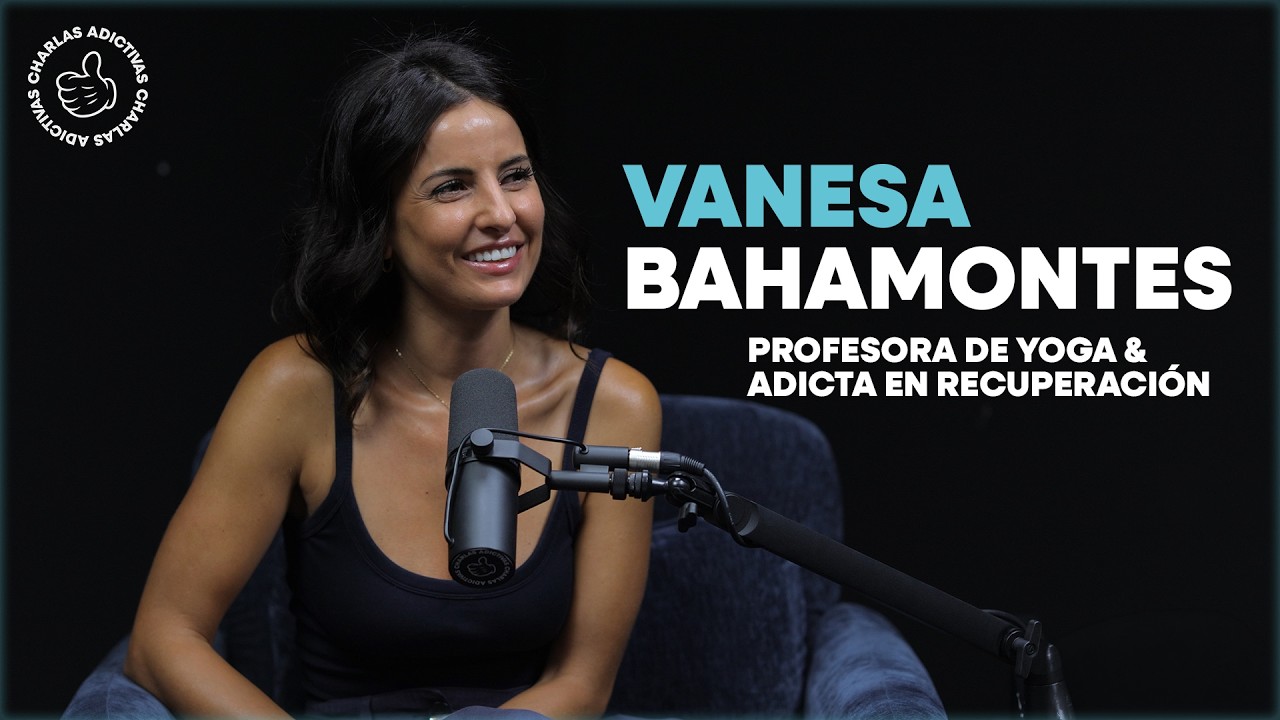
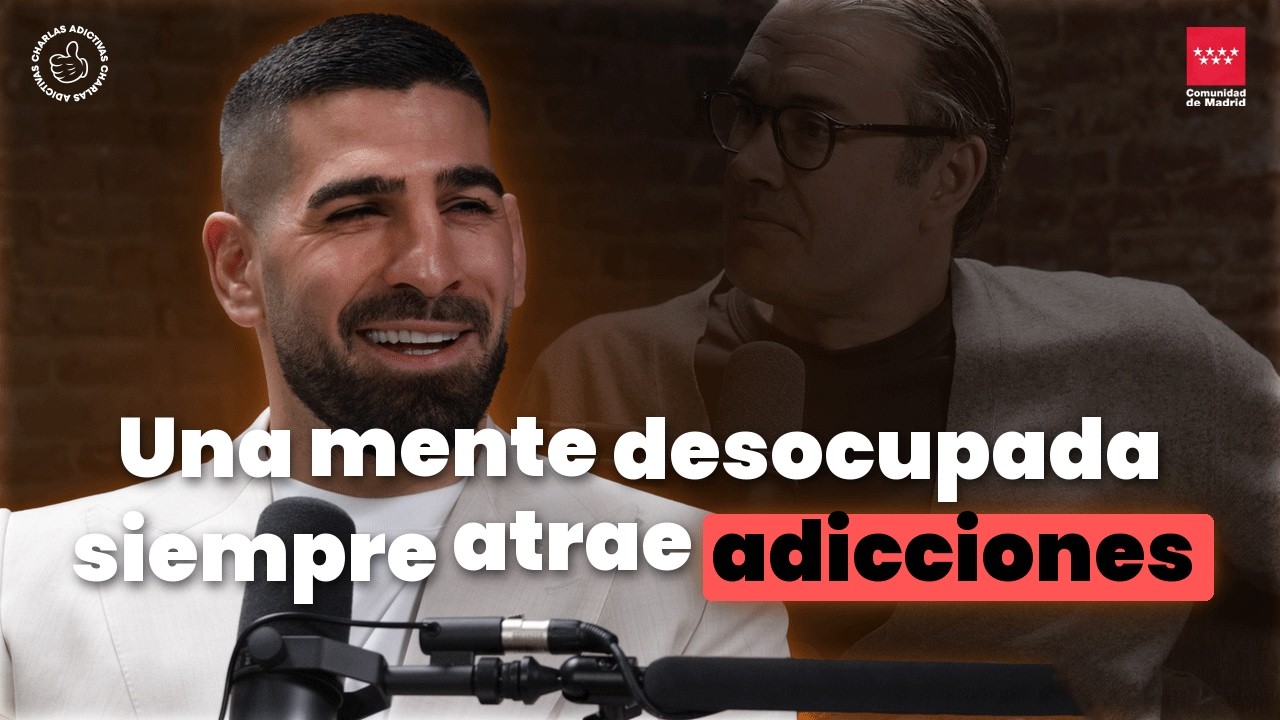
I'm also telling you this from the other side of the table. I went through my own recovery thirteen years ago, and what I remember most about the first week is how long the nights feel and how little comfort it is when someone tells you “it's normal” if that someone hasn't been there. That's why this is the first-week topic in group, and hearing from someone who's two weeks ahead of you is worth more than any advice of mine. If you want to hear how people who've quit tell it, the podcast “Charlas Adictivas” (on Spotify and YouTube, @charlasadictivas) has long conversations with people who've been through this.
What medication exists and what doesn't
There is no approved drug to treat cannabis addiction or its withdrawal; the Bonnet and Preuss review says so, and so does the Socidrogalcohol comorbidity guide. Some drugs have been studied with partial results for the insomnia or anxiety that come with it, and others can make it worse. That's why, if the insomnia or anxiety is very intense, the sensible thing is to have it assessed by a psychiatrist who knows about addiction, not to self-medicate with whatever is in the drawer at home. Swapping the joint for benzodiazepines on your own means trading one dependence for another with a worse withdrawal, and it's a mistake we see fairly often; if you're already there, read how to quit benzodiazepines under medical supervision.
When it's an emergency
Important: cannabis withdrawal isn't dangerous in itself, but there are situations that are, and they aren't withdrawal. If, when you stop smoking (or while you're smoking), you start having thoughts that you're being watched or followed, hearing voices, feeling strangely disconnected from reality, vomiting that won't stop (so-called cannabinoid hyperemesis syndrome, which occurs in heavy users and can't be managed at home) or thoughts of harming yourself, don't wait for it to pass. Call 112 in an emergency, or 024, the suicide prevention line, if what you're having are thoughts of taking your own life.
Cannabis and mental health: the part almost nobody explains
Anxiety and depression: which came first
The Socidrogalcohol guide reports an odds ratio of 1.68 for anxiety disorders in people with cannabis use disorder. The figures it cites next come from clinical samples, that is, people who were already in treatment, and they should be read that way: in a Madrid clinical sample of people treated for cannabis addiction, 24.1% had generalized anxiety disorder, 19.5% a major depressive episode and 29.3% bipolar disorder; in a sample of 600 users who sought care, 38% met criteria for ADHD. These aren't the rates for people who smoke daily and have never set foot in a clinic, but they do say something important: when use becomes a problem, it almost always comes with company. In practice, that translates into one rule: if you treat the use and don't look at the rest, the person goes back to smoking because the rest is still there. And the reverse: treating the anxiety of someone who smokes five joints a day without addressing the use is swimming against the current.
Psychosis: the number you need to know
The EU-GEI study published in The Lancet Psychiatry, with sites in eleven European cities, including Madrid and Barcelona, found that daily cannabis use multiplies the risk of a first psychotic episode by 3.2, and daily use of high-potency cannabis (10% THC or more) multiplies it by 4.8. Remember that Spanish hash is at 29%. In Madrid, 12.7% of first psychotic episodes were attributed to daily use. It doesn't mean you're going to have a psychotic break; it means that if you smoke daily and have a family history or notice growing suspiciousness, the risk isn't theoretical.
Why a dual diagnosis center looks at both at once
Dual diagnosis is the technical name for what I've just described: an addiction and another mental disorder at the same time. Our team is built for exactly that; Dr. Martínez is a psychiatrist subspecialized in dual diagnosis and addiction, and the initial assessment always covers mood, anxiety, sleep and attention, not just how much you smoke. If you want to know how it's organized, the page on addiction psychologist and psychiatrist in Madrid explains it in detail.
How cannabis addiction is treated (and why you almost never need inpatient rehab)
What works according to the evidence
The Socidrogalcohol guide identifies cognitive behavioral therapy and motivational interviewing as the most promising approaches, and notes that contingency management works during the intervention but its results tend to fade afterward. That's what we do: motivational interviewing at the start, because almost nobody arrives fully convinced; cognitive behavioral therapy to dismantle the automatic habits (the time, the place, the emotion that comes before the joint); and relapse prevention for when using is no longer the daily problem but is still an option in your head. Since cannabis withdrawal carries no medical risk—unlike withdrawal from alcohol or benzodiazepines, which do require supervision—treatment is outpatient: you carry on with your life, your work and your home, and you come to the center or join online.
Why group changes the outlook
Almost nobody mentions group therapy when you look up information about cannabis, and it's one of the pieces that changes the outcome the most. One of the most common symptoms of cannabis addiction is isolation: the person has gradually replaced people with the couch. Group reverses that directly. There's a scene that repeats in almost every new group, and I describe it as a generic composite because it isn't any specific case: someone says for the first time that they smoke before going to work, braces for the judgmental look, and instead gets several people nodding. I remember my first group with that same mix of shame and relief, and I've never seen anyone leave one worse off than they came in. That's worth more than any technique. It's also where you learn, from people a few weeks ahead of you, that the first week's insomnia ends and that the weird dreams are normal.
Working with the family
When use has gone on for years, the family or partner has developed their own way of reacting, often somewhere between watchfulness and exhaustion. Working with them in parallel—what to say, what not to monitor, how to support someone through a relapse without it being the end of the world—improves the outcome for the person who uses and, along the way, for the people who love them.
Phases and realistic timelines
The process at Charlas Adictivas goes from the initial assessment to a personalized plan, then on to individual and group work, and ends with consolidation and relapse prevention. With cannabis we usually talk about an intensive phase of three to six months and another six months of less frequent consolidation. We don't promise that at the end of it you'll never smoke again; nobody honest does. What we can say is that people who complete the process reach the end with tools they didn't have before and with a relationship with cannabis that no longer runs their life. The program details are on the page for cannabis addiction treatment in Madrid.
Where to get help in Madrid
The public system
It exists and it works, and you should know about it before anyone sells you anything. In the city of Madrid, the Madrid Salud Addiction Care Centers (CAD) serve people with addictions and their families; according to their 2026 service charter, the first appointment is given within 15 to 30 calendar days, hours are Monday to Thursday 8:30 a.m. to 7:30 p.m. and Friday 8:30 a.m. to 2:30 p.m., and families who come to the prevention service are seen within 7-10 days. In the rest of the region, the Community of Madrid points out that addiction treatment is covered by the public health system through its Addiction Treatment Centers. If money is an obstacle, start there.
Private outpatient care with a psychiatrist and a weekly group
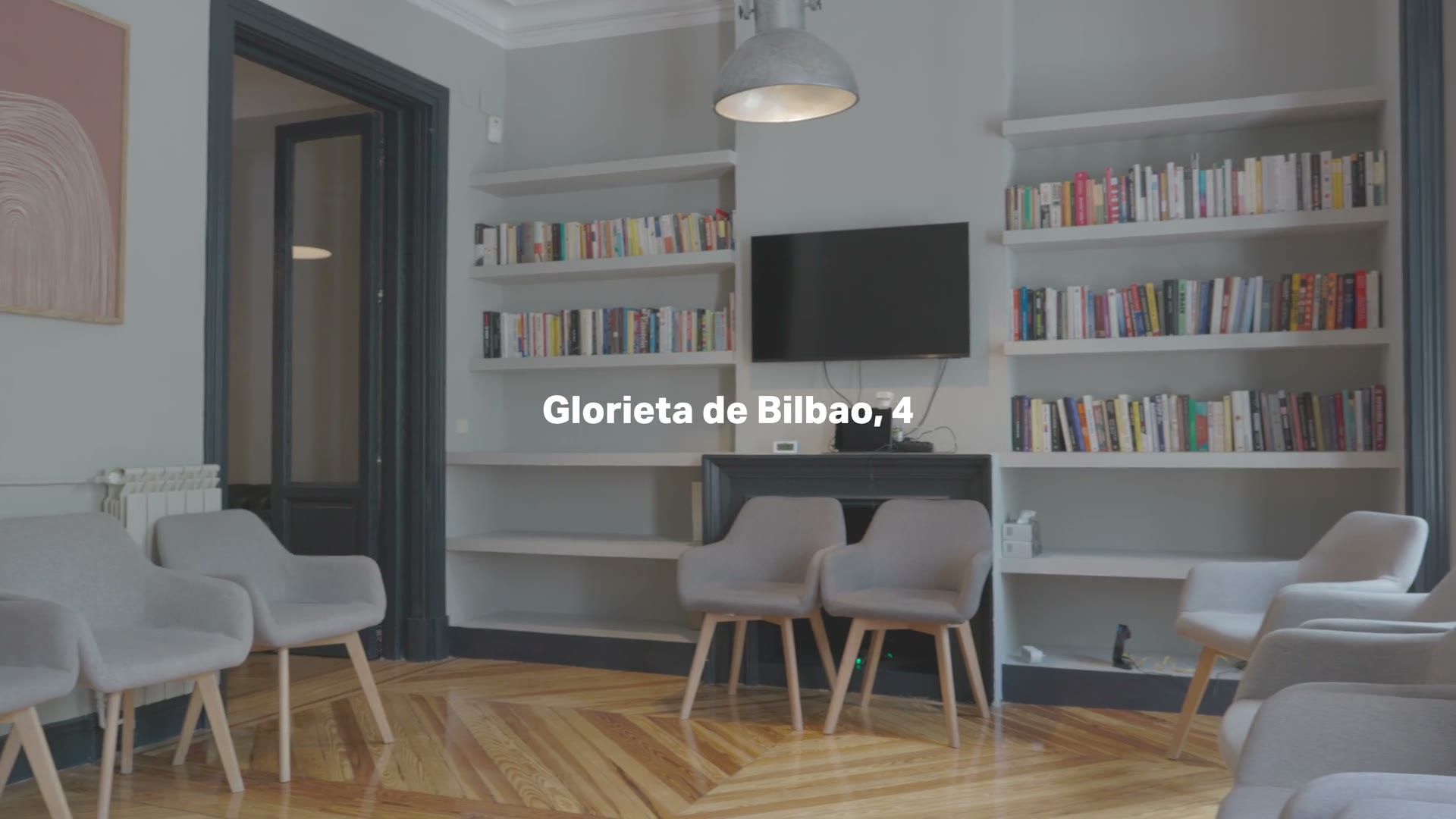
What a center like ours offers is a different combination: the first conversation is booked directly, with no referral needed; hours from 9 a.m. to 8 p.m., Monday to Friday; a dual diagnosis psychiatrist from the very first assessment; a weekly group with people who are quitting cannabis; and intensive individual day-to-day support when needed. We're at Glorieta de Bilbao 4, in Chamberí, and the first conversation is free and with no obligation: about twenty minutes, at the center or by video call, to tell us what's going on so we can tell you honestly whether what you need is this, the public system or simply some follow-up. You can read what's included in the program for cannabis treatment in Madrid o book that first conversation directly.
If you're not in Madrid
Outpatient cannabis treatment adapts well to an online format, both individual therapy and group, and we work with people from all over Spain. The page on online addiction therapy explains how it works and what you need.
One last thing before you close the tab
If you've read this far, you probably already know the answer to the question you came in with. You don't need to declare anything or set a date. Just do an honest test: one week without smoking, for real, and see what happens with your sleep, your mood and your cravings. If it goes by uneventfully, congratulations, you're in the majority. If the week is an uphill battle or you don't make it to Thursday, that's information too, and it's exactly the moment when a twenty-minute conversation with someone who sees this every day can save you months of going around in circles. Message us on WhatsApp at 628 27 94 98, email info@charlasadictivas.com or reach us through the contact page. No obligation, no lecture.
Who writes and who reviews
Author
Ruy Arroyo Ozores, founder and CEO of Charlas Adictivas. Master's in Drug Addiction from the University of Barcelona, trained at Stanford and Bath, with more than fifteen years of work in addiction. He writes from his clinical practice and from his own experience of recovery.
Medical review
Dr. Alfonso Martínez, medical director of Charlas Adictivas, psychiatrist subspecialized in dual diagnosis and addiction. He oversees the center's clinical area and has reviewed the content of this article. Medical review date: October 2026.
Sources
- Spanish Observatory on Drugs and Addictions (OEDA), Ministry of Health. EDADES 2024 Executive Report.
- Ministry of Health. Press release on the ESTUDES 2025 survey, November 5, 2025.
- Community of Madrid. Training for 81,000 students on the risks of cannabis, April 21, 2026.
- OEDA, Ministry of Health. Treatment Admissions Indicator Report 2025 (2023 data).
- OEDA, Ministry of Health. Cannabis Monograph 2025. Use and Consequences.
- EUDA. European Drug Report 2026 – Cannabis.
- Leung J, Chan GCK, Hides L, Hall WD. What is the prevalence and risk of cannabis use disorders among people who use cannabis? A systematic review and meta-analysis. Addictive Behaviors, 2020.
- National Institute on Drug Abuse (NIDA). Cannabis (Marijuana) Research Report: Is marijuana addictive?
- Bahji A et al. Prevalence of Cannabis Withdrawal Symptoms Among People With Regular or Dependent Use of Cannabinoids. JAMA Network Open, 2020.
- Bonnet U, Preuss UW. The cannabis withdrawal syndrome: current insights. Substance Abuse and Rehabilitation, 2017.
- Di Forti M et al. The contribution of cannabis use to variation in the incidence of psychotic disorder across Europe (EU-GEI). The Lancet Psychiatry, 2019.
- Arias F, Rentero D, Fernández-Artamendi S, Balcells M. Guía Comorbilidad: Cannabis (Comorbidity Guide: Cannabis). Socidrogalcohol.
- Madrid Salud. Carta de Servicios del Instituto de Adicciones 2026 (Addiction Institute Service Charter 2026).
- Community of Madrid. Addictions: treatment in the public health system.
- Maldita Ciencia. Symptoms when quitting marijuana and tips to prevent relapse, June 17, 2022.
Sources consulted
- EDADES 2024 Executive Report, OEDA / Ministry of Health
- Ministry of Health press release, 11-5-2025
- Comunidad de Madrid, news release 04-21-2026
- OEDA, Treatment Admissions Indicator Report 2025 (2023 data)
- OEDA, Cannabis Monograph 2025. Use and consequences. Ministry of Health (pp. 21, 82-83, 91-94, 119, 128)
- EUDA, European Drug Report 2026 – Cannabis
- NIDA, Cannabis (Marijuana) Research Report: Is marijuana addictive?
- Bahji A et al. JAMA Network Open 2020;3(4):e202370
- Bonnet U, Preuss UW. The cannabis withdrawal syndrome: current insights. Subst Abuse Rehabil 2017
- Di Forti M et al. Lancet Psychiatry 2019;6:427-36 (EU-GEI), full text on PMC
- Arias F, Rentero D, Fernández-Artamendi S, Balcells M. Guía Comorbilidad: Cannabis (Comorbidity Guide: Cannabis). Socidrogalcohol
- Madrid Salud, Addiction Institute Service Charter 2026 (brochure)
- Comunidad de Madrid, Addictions (health portal)